Introduction
If your flood map says Zone A and your neighbour’s says Zone AE, you are looking at the same flood risk — and two very different pieces of paper. The question of flood zone AE vs A comes up every time someone buys, builds, or insures a home near water, because the two letters decide how high you must build, how your insurance is priced, and how hard it is to challenge the map.
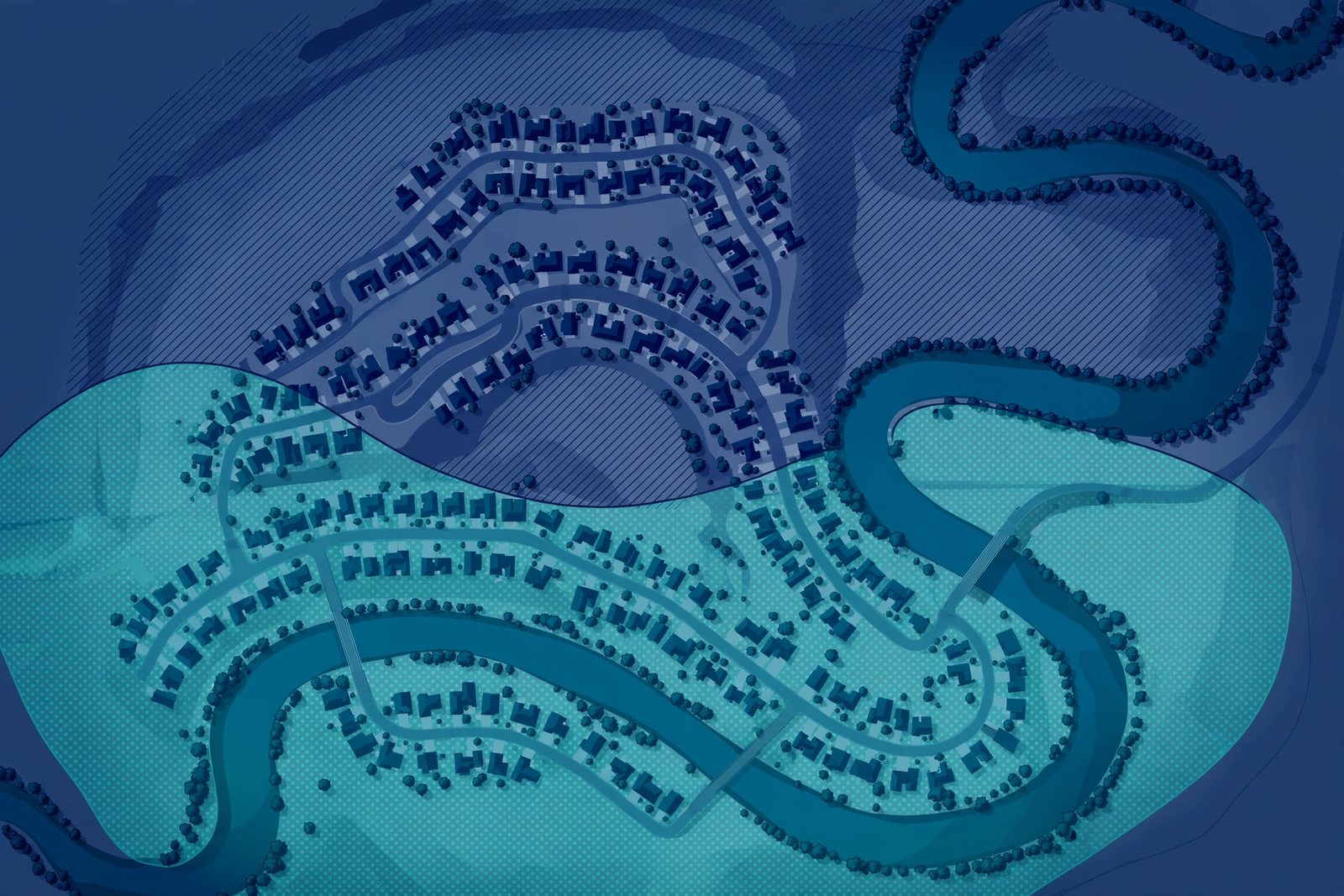
Here is the short answer: Zone A and Zone AE both sit inside the Special Flood Hazard Area (SFHA), the land FEMA says has a 1% chance of flooding in any given year. That 1% annual chance works out to about a 26% chance of flooding over the life of a 30-year mortgage. Both zones trigger the same federal rule: if you buy with a federally backed mortgage, your lender must require flood insurance.
The difference is the homework behind the letter. Zone AE comes from a detailed engineering study that produced a Base Flood Elevation (BFE) — the height the 1%-annual-chance flood is expected to reach. Zone A comes from an approximate study, and the map shows no BFE at all.
That missing number changes almost everything practical. This guide compares flood zone AE vs A side by side: what each letter means, how the study was done, what you can and cannot build, what it does to your insurance, and how to challenge each designation.
NFIP status note (checked November 24, 2026): The National Flood Insurance Program’s authorisation from Congress currently runs through 11:59 p.m. on December 11, 2026. It was extended on September 2, 2026. If Congress does not act by that date, FEMA would stop selling and renewing policies (existing policies would stay in force and claims would still be paid). Check the current status before you close on a home or buy a policy.

Flood Zone AE vs A at a Glance
| Zone A | Zone AE | |
|---|---|---|
| Flood risk | 1% annual chance (100-year flood) | 1% annual chance (100-year flood) |
| In the SFHA? | Yes | Yes |
| How it was mapped | Approximate methods, no detailed study | Detailed hydrologic and hydraulic study |
| Base Flood Elevation (BFE) | Not shown on the map | Published on the map, usually to the nearest foot |
| Flood insurance required with a federally backed mortgage? | Yes | Yes |
| Building rules | Lowest floor must be above a flood elevation established from best available data | Lowest floor must be at or above the published BFE (plus freeboard where the local code requires it) |
| Challenging the map (LOMA) | Harder — no published BFE to measure against | Easier — the BFE gives a clear number to beat |
| Former label | — | A1–A30 on older maps |
The table tells the whole story in one line: the risk is identical, the information is not.
What Is Flood Zone A?
Zone A is the high-risk floodplain as mapped by approximate methods. FEMA has identified the area as having a 1% annual chance of flooding, but it has not carried out a detailed engineering study there, so no Base Flood Elevation is printed on the Flood Insurance Rate Map (FIRM).
Zone A usually appears in places where detailed studies were not cost-effective — rural stretches of river, sparsely developed valleys, and small tributaries. For the homeowner, Zone A means more uncertainty at every step: permitting, building, and insuring.
What Is Flood Zone AE?
Zone AE is the same 1% annual chance floodplain, mapped after a detailed study. Engineers modelled the river or coastline, calculated the water-surface elevation of the base flood, and printed that number — the Base Flood Elevation — on the map. On older maps these areas were labelled A1 through A30.
Because the BFE is published, everything downstream becomes concrete: the lowest floor must sit at or above the BFE (plus local freeboard), an elevation certificate records exactly how a building sits relative to it, and an insurer can price the risk against a known elevation.
The One Difference That Matters: The Base Flood Elevation
The Base Flood Elevation is the water-surface elevation of the 1%-annual-chance flood, usually in feet above mean sea level. In Zone AE it is on the map; in Zone A it is not.
Why does one number matter so much?
- Building: In AE, the rule is simple — build at or above the BFE (plus any local freeboard). In A, the community must first establish a flood elevation from the best available data, which can mean hiring an engineer and waiting.
- Insurance pricing: Under Risk Rating 2.0, FEMA now prices every NFIP policy individually using distance to water, flood type, foundation, first-floor height, and the cost to rebuild — not just the zone letter. But the BFE still matters, because first-floor height relative to the BFE is a direct input to the price. In Zone A, that input has to be established rather than read off the map.
- Selling: Buyers, lenders, and their agents all understand a map that shows a number. A Zone A designation invites questions a Zone AE designation answers on the page.
For a fuller explanation of how FEMA labels every zone, see our complete guide to what are flood zone codes.
Flood Zone AE vs A: Building Rules
Both zones are in the SFHA, so both fall under the same federal floodplain-management rules and the same local ordinance. The practical differences are in how the rules are applied.
In Zone AE, the lowest floor of a new or substantially improved building must be at or above the published BFE. Most communities require additional freeboard on top — commonly one foot, and two feet in many coastal and high-risk jurisdictions. Flood openings (vents) are required in enclosed areas below the lowest floor, and utilities and equipment must be elevated or floodproofed.
In Zone A, the same standard applies in principle — the lowest floor must be above the flood level — but the flood level itself has to be established first. The community uses the best available data, which may come from a nearby detailed study, a state agency, or an engineering analysis paid for by the owner. That extra step costs time and money, and it introduces a number that a neighbour, a buyer, or a future map revision can dispute.
One rule is the same in both zones: a basement counts as the lowest floor. You cannot dodge the elevation requirement by putting living space below grade, and the NFIP does not cover basement contents the way it covers the rest of the home.
Flood Zone AE vs A: Insurance Cost
Both zones trigger the mandatory-purchase rule, so if you have a federally backed mortgage, flood insurance is not optional in either zone. The question is what it costs — and here the honest answer is that the zone letter is no longer the main driver of the price.
Since Risk Rating 2.0 took full effect, FEMA prices NFIP policies property by property. The factors are flood frequency, flood type (river overflow, storm surge, coastal erosion, heavy rainfall), distance to water, foundation type, first-floor height, and the cost to rebuild. Two identical houses on the same street can pay different premiums. The old zone-based pricing is gone.
What that means for flood zone AE vs A:
- In Zone AE, the BFE is known, so the first-floor height relative to the BFE is a clean, documented input. A home built well above the BFE generally prices better than one built at the minimum.
- In Zone A, the elevation input has to be established. Until it is, pricing is based on less precise information, and the uncertainty itself can cost you.
- The caps are the same. An NFIP policy for a one-to-four-family home covers at most $250,000 for the building and $100,000 for contents — limits that have not changed since 1994. Contents are paid at actual cash value, not replacement cost. If your home would cost more than $250,000 to rebuild, the NFIP alone leaves a gap, and private or excess flood cover is the way to close it. The national average NFIP premium is about $976 a year (NerdWallet, based on FEMA data), but your price depends on your property, not on the average.
- Waiting period: A new NFIP policy generally takes 30 days to take effect, unless it is bought at a loan closing. Do not wait until a storm is on the forecast.
Homeowners insurance itself does not cover flooding in either zone — flood is a separate policy, in the US and everywhere else. If you are comparing state costs, our guides to homeowners insurance in Georgia and homeowners insurance in New York show how the underlying home policy is priced in two very different markets.
Can You Challenge Your Zone? LOMA Options in A vs AE
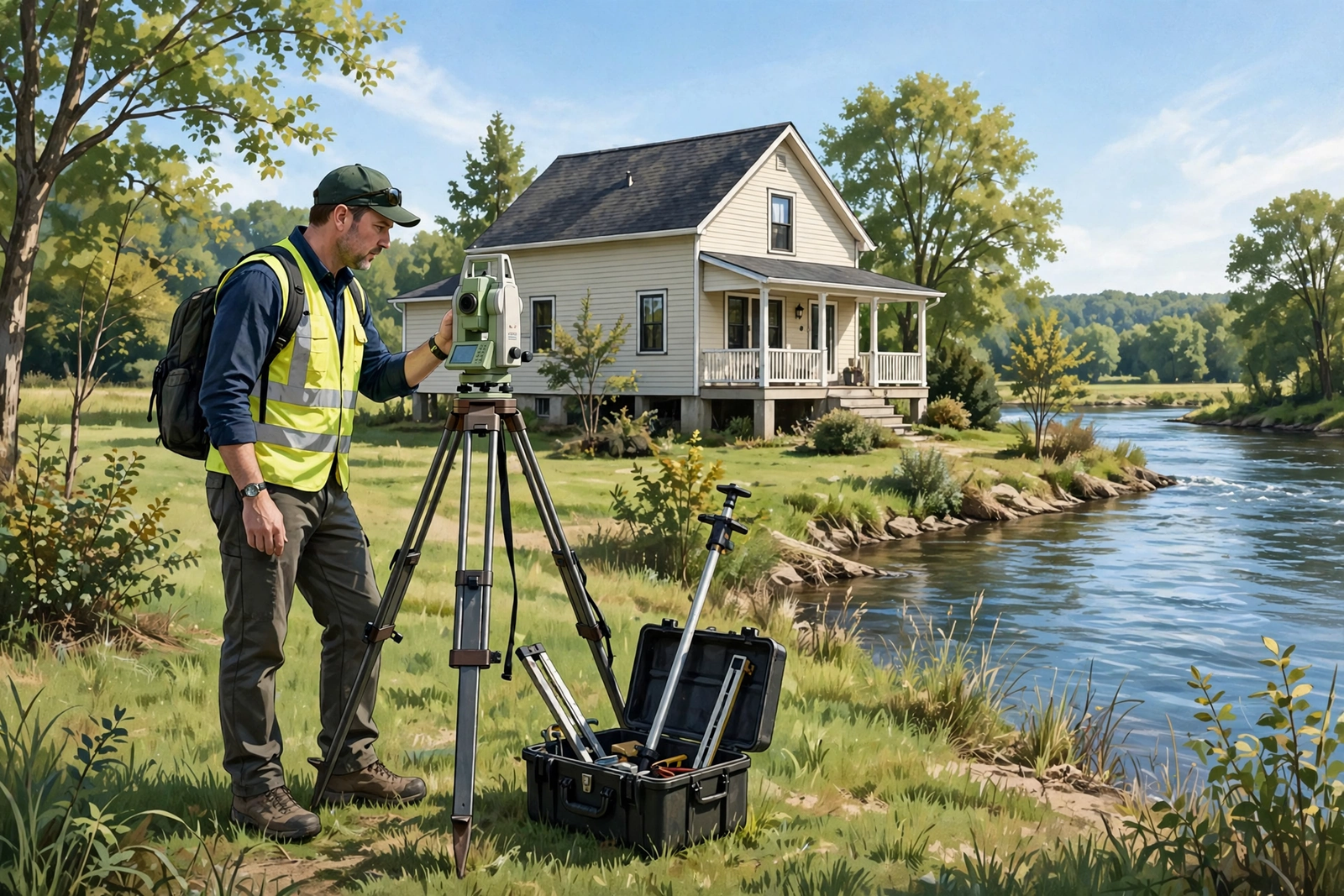
If you believe your property is wrongly mapped, the main tool is a Letter of Map Amendment (LOMA): FEMA’s official determination that a property is not in the SFHA because its lowest adjacent grade sits above the base flood elevation. A successful LOMA removes the federal mandatory-purchase requirement, though your lender may still require cover.
Here the difference between flood zone AE vs A is at its sharpest:
- In Zone AE, a LOMA is a measurement exercise. A licensed surveyor prepares an elevation certificate, FEMA compares the lowest adjacent grade with the published BFE, and if the ground is above the BFE, the LOMA follows. It is the cleanest version of the process.
- In Zone A, a LOMA is harder. There is no published BFE to measure against, so FEMA must first determine a base flood elevation for the property — usually from the best available data or an engineering analysis. The outcome is less certain, the process takes longer, and it may cost more in survey and engineering fees.
A related tool is the Letter of Map Revision (LOMR), which changes the map itself — for example, after a flood-control project or a new study. A LOMR is a bigger undertaking than a LOMA and usually involves the community, not just one owner. Either way, talk to a licensed surveyor before you spend money: a quick look at the map and the ground will tell you whether a challenge has a realistic chance.
Buying a Home in Zone A or Zone AE: A Checklist
- Read the map yourself. Use FEMA’s Flood Map Service Center (msc.fema.gov) and check the exact zone and, in AE, the BFE for the property.
- Ask for the elevation certificate. In AE it should exist and show the lowest floor relative to the BFE. In A, ask whether one has ever been prepared — and budget for one if not.
- Get a flood insurance quote before you offer. The premium is property-specific under Risk Rating 2.0, and the quote is the only number that matters.
- Check the NFIP calendar. The program’s authorisation runs through December 11, 2026 (checked November 24, 2026). If you are closing near that date, confirm with your agent that a policy can be bound in time — or whether a private flood policy is the safer route.
- Ask about the community rating. Communities in FEMA’s Community Rating System earn premium discounts of 5% to 45% for their residents. It is worth asking whether yours participates.
Flood Zone AE vs A: Which Is Worse?
Neither. Zone A and Zone AE describe the same 1% annual chance of flooding. AE is not safer than A, and A is not more dangerous than AE. What AE gives you is certainty: a published elevation, a clear building standard, a cleaner insurance quote, and a simpler path to challenge the map. What Zone A gives you is the same risk with less information — and in flood insurance, less information usually costs more time and money.
If you are choosing between two homes, one in Zone A and one in Zone AE, do not decide on the letter. Decide on the elevation, the distance to water, the flood history, and the insurance quote. For a different system entirely, see how flood insurance works in Europe.
Frequently Asked Questions
Is flood zone AE worse than flood zone A?
No. Flood zone AE vs A is a difference in mapping, not in risk. Both are high-risk SFHA zones with a 1% annual chance of flooding and a 26% chance over a 30-year mortgage. AE has a published Base Flood Elevation from a detailed study; A does not.
Does flood zone A require flood insurance?
Yes, if the building is bought with a federally backed mortgage — both zones trigger the federal mandatory-purchase rule. A cash buyer is not federally required to carry flood insurance, but going without it in a 1%-annual-chance floodplain is a large financial risk.
What is the Base Flood Elevation in Zone A?
There is none published. Zone A is mapped by approximate methods, so the Flood Insurance Rate Map shows no BFE. A BFE can be established for a specific property from the best available data or an engineering study, which is what a LOMA application or a building permit in Zone A often requires.
Can I get a LOMA in flood zone A?
Yes, but it is harder than in Zone AE. A LOMA requires showing that the lowest adjacent grade is above the base flood elevation, and in Zone A that elevation must first be determined, because the map does not publish one. A licensed surveyor can tell you whether a LOMA is realistic for your property.
Is flood insurance cheaper in Zone AE than in Zone A?
Not automatically. Under Risk Rating 2.0, NFIP premiums are priced per property on distance to water, flood type, foundation, first-floor height, and rebuild cost — not on the zone letter alone.
What happens if the NFIP authorisation lapses on December 11, 2026?
As of November 24, 2026, the NFIP is authorised through 11:59 p.m. on December 11, 2026. If Congress does not extend it, existing policies stay in force and claims are still paid, but FEMA would stop selling new policies and renewing expiring ones until Congress acts. That can delay home closings that depend on a new NFIP policy.



One Comment on “Flood Zone AE vs A: What’s the Difference in 2026?”