Introduction
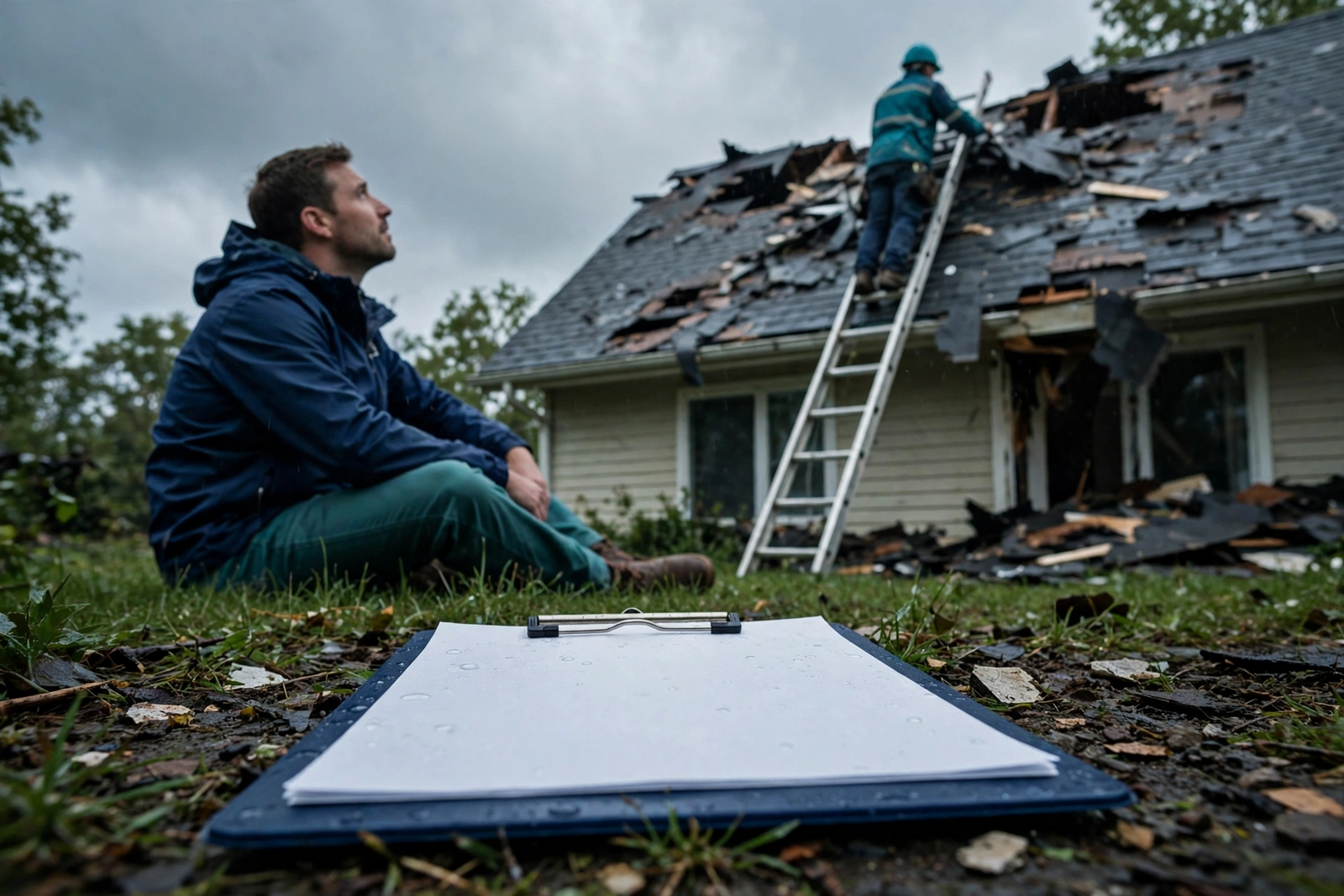
Roof insurance claim denied what to do — that is the question every homeowner asks when the letter arrives saying the insurer will not pay for the roof. A denied roof claim is not the end of the story: insurers deny claims for specific reasons written in the denial letter, and most can be challenged with the right evidence, process and timing.
This guide covers the five most common denial reasons, the step-by-step fightback — re-inspection, appraisal, a department of insurance complaint — and the deadlines that matter. It is general information, not legal advice.
Roof Insurance Claim Denied What to Do First: Read the Denial Letter Like an Adjuster
The denial letter is the insurer’s case against your claim; your response must answer it point by point. Before you call anyone, read it twice and pull out three things.
The exact reason for the denial
The letter must state why the claim was denied — “wear and tear,” “pre-existing damage,” “no covered peril,” “damage below the deductible,” or “late notice.” Write the reason down verbatim: everything you do next is built around disproving it.
The policy sections the letter cites
A good denial letter cites the policy language it relies on — an exclusion, a condition, a definition. Find those sections in your policy and read them in full: letters sometimes quote a section out of context, or cite a wear-and-tear exclusion for plainly storm-caused damage.
No citation at all is itself a weakness — ask for it in writing.
The deadline in the letter
Some letters mention a deadline for appeal. Your policy has its own: a time limit for filing suit (often one to two years from the date of loss) and a time limit for submitting a proof of loss.
Calendar every deadline the day the letter arrives — a strong case filed late is a lost case.
Why Roof Claims Get Denied: The 5 Most Common Reasons
1. Wear and tear vs. storm damage
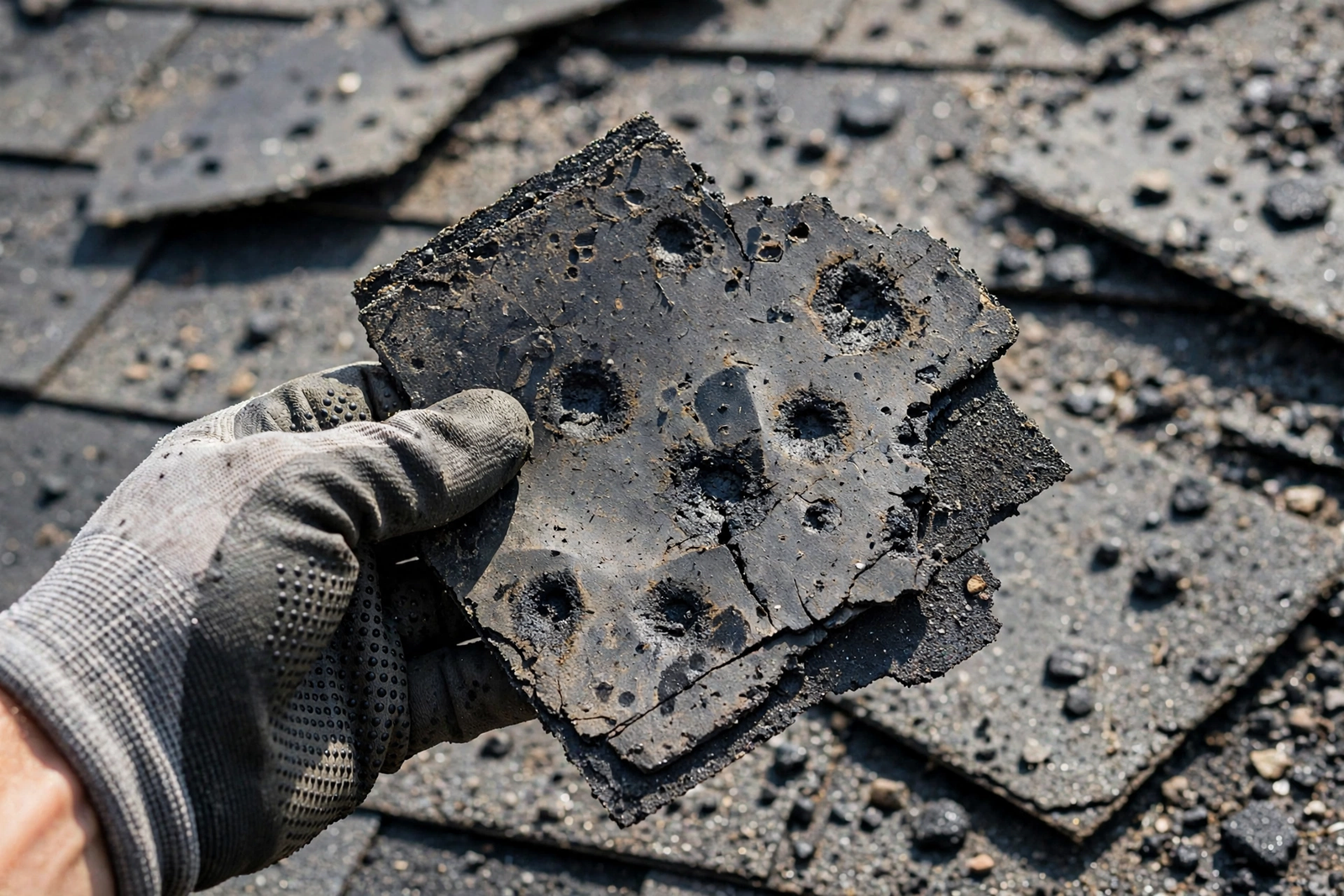
This is the number one reason roof claims are denied. Homeowners policies cover sudden and accidental damage — hail, wind, a fallen tree. They do not cover a roof that simply wore out.
The fight here is about causation: was the damage caused by one storm event, or by years of gradual deterioration? An adjuster who finds curled, brittle or granule-bare shingles across the whole roof will call it wear and tear.
A roofer who finds fresh hail bruising, creased shingles on one slope or wind-lifted tabs in a clear storm pattern will say the opposite. The difference is evidence: dated photos from before the storm, a roofer’s report describing fresh damage, and the weather report for the storm date.
The National Weather Service and NOAA Storm Prediction Center publish storm reports by date and location, and insurers use those same reports to check a date of loss — pull the report for your storm and keep it in the file.
2. Roof age and depreciation
There is no universal roof-age cutoff in homeowners insurance: the age and the treatment vary by carrier, policy and state, so do not assume a number applies to you. What matters is whether your policy pays replacement cost value (RCV) or actual cash value (ACV) for the roof.
With RCV, the insurer pays the replacement cost, usually in two payments — the ACV amount first, then the recoverable depreciation once the work is done. With ACV, it pays the depreciated value only, which can be a small number on a 20-year-old roof.
Many policies switch a roof to ACV past a set age, or pay RCV only if the roof is repaired within a stated time. Read your policy’s roof schedule first: a denial that is really a depreciation dispute needs a different response than one that says the damage is not covered at all.
3. Pre-existing damage
If the insurer says the damage existed before the policy started, or before the storm you named, it will deny the claim — common with old repairs, patched areas, or damage from an earlier storm that was never claimed.
The counter is a clear date of loss: photos from before the storm, a home inspection report, maintenance records, and the weather report for the storm date. If the damage is genuinely old, no process turns it into a covered loss — but if the insurer is guessing about the damage’s age, a roofer’s report dating it to the storm is the answer.
4. Damage below the deductible
Sometimes the claim is not really denied — the repair cost is simply less than the deductible, so nothing is payable; common with minor wind damage or a small leak. Before you accept that, check the estimate: is it a real repair estimate from a roofer, or the adjuster’s quick figure?
A second estimate often lands higher, and if the true cost clears the deductible, the claim is payable. Also check for a separate wind or hail deductible — in many states it is a percentage of the dwelling limit (often 1% to 5%), not the flat dollar deductible, which changes the math completely.
Illustrative: a $20,000 replacement on an ACV policy with 50% depreciation and a $2,500 deductible pays $7,500; on an RCV policy it pays the full $20,000 minus the deductible, depreciation recoverable after the work. Your policy’s schedule decides the real figure.
5. Late notice or a missed deadline
Policies require you to report a loss promptly, and many set a hard deadline for filing after a storm — sometimes as short as one year from the date of loss. A late-notice denial is hard to beat but not always final: some states require the insurer to show it was actually harmed by the delay, and a good reason (you were away, the damage was hidden) can matter.
If your denial is for late notice, check your state’s rule and your policy’s notice condition before you give up.
Roof Insurance Claim Denied What to Do Next: The Step-by-Step Fightback
Work these steps in order. Each one is cheaper and faster than the next, and each one builds the record the next one needs.
Step 1: Gather your evidence before you call anyone
Collect dated photos of the damage, photos of the roof from before the storm, the roofer’s report, maintenance records and the weather report for the storm date. Write a one-page timeline: when the storm hit, when you noticed the damage, when you filed, when the adjuster visited, and what each person said.
A file that reads like a timeline is far harder to dismiss than a phone complaint.
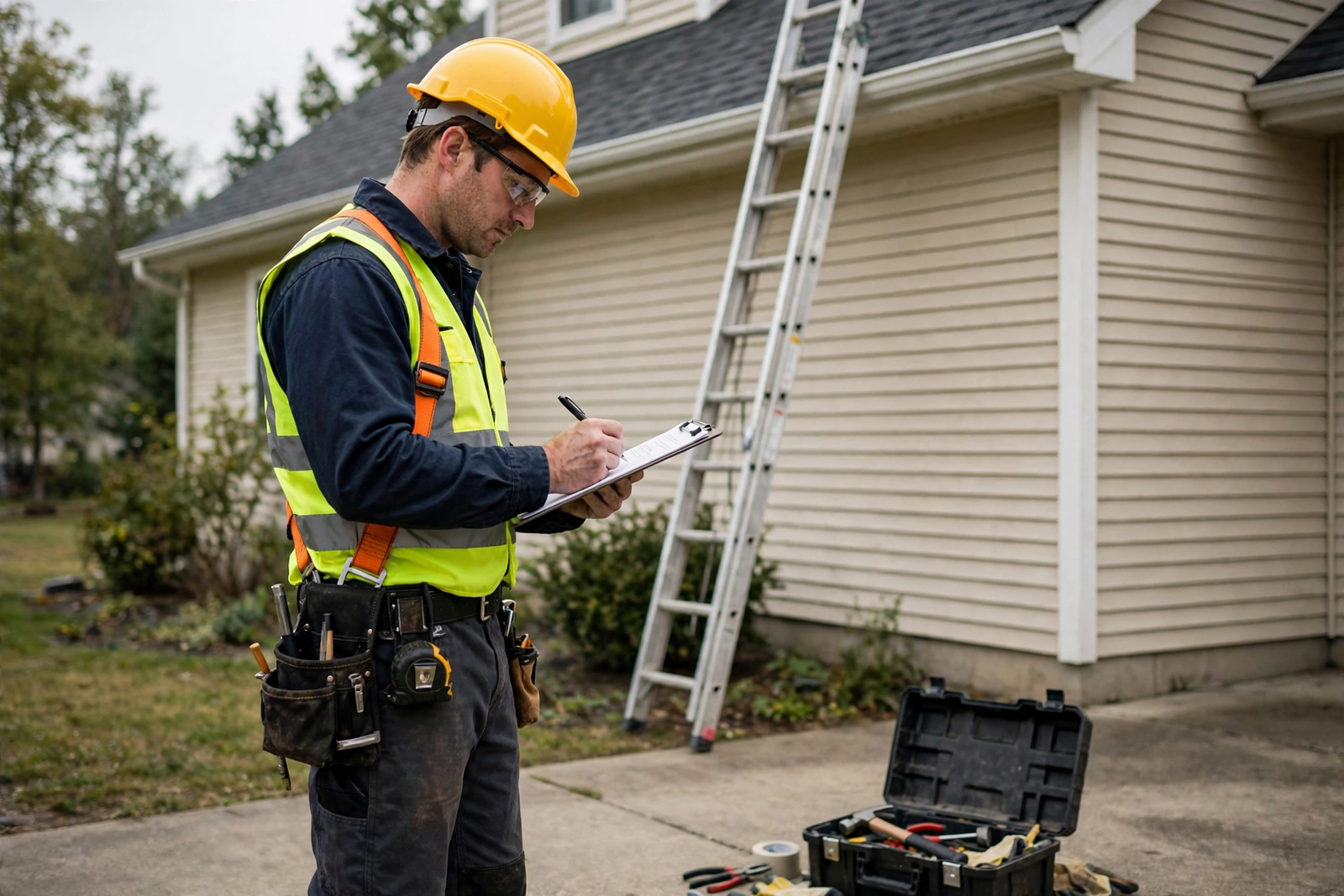
Step 2: Get an independent roofer inspection
Hire a licensed roofer — not the insurer’s preferred contractor — to inspect the roof and write a report describing the damage, its likely cause and the repair or replacement cost. This is the single most useful document in a denied roof claim: the professional opinion that answers the adjuster’s opinion.
If you have not filed before, our guide to submitting an insurance claim explains the process step by step.
Step 3: Ask for a re-inspection — in writing
Send the insurer a written request for a re-inspection (email counts), attaching the roofer’s report and your photos. Ask for a different adjuster or a supervisor to attend, with your roofer present.
Many denied claims are reversed at this stage, because a second look with a roofer present produces a different scope of damage. Give the insurer a reasonable deadline — ten business days is fair — and note that you will pursue the appraisal clause if the denial stands.
Step 4: File a supplemental claim
If the re-inspection finds more damage than the first inspection, or damage the adjuster missed (underlayment, flashing, decking, interior water damage), file a supplemental claim for the additional items.
Supplements are a normal part of roofing claims — but they must be documented with photos and line-item estimates, not asserted in general terms.
Step 5: Use the appraisal clause — for amount disputes only
The appraisal clause is the most powerful tool in a denied roof claim, and the most misunderstood. It resolves disagreements about the amount of the loss — not about whether the loss is covered at all.
If the insurer says the damage is wear and tear and therefore not covered, appraisal will not help: that is a coverage dispute, and it belongs with the regulator or a lawyer. If the insurer agrees the storm damaged the roof but offers $9,000 when your roofer’s estimate is $18,000, appraisal is exactly the right tool.
How it works: either side can demand appraisal in writing. Each side picks its own appraiser, usually within 20 days under the standard HO-3 form. The two appraisers try to agree on the amount; if they cannot, they pick a neutral umpire, and any two of the three can set it. The decision is binding.
What it costs: you pay your own appraiser — typically $300 to $800 for a residential roof claim — and, if an umpire is needed, half of the umpire’s fee (typically $500 to $1,200 in total). Total out-of-pocket cost is typically $800 to $1,600 for a straightforward claim (Roof Policy, 2026); complex claims cost more, so get a fee quote first.
The process typically takes 30 to 90 days. Do the math first: if the gap between the insurer’s offer and your estimate is $1,200, appraisal fees may eat the recovery; if it is $6,000 or more, the math usually favours appraisal.
Step 6: File a complaint with your state department of insurance
Every state has a department of insurance, and filing a complaint is free. The National Association of Insurance Commissioners (NAIC) explains the process: gather your policy number, claim number, bills and records, keep a log of every communication, and write a factual account of what happened — stick to facts and timelines, and state the outcome you want.
You can file online, by mail or by phone through your state department.
Know what the regulator can and cannot do. It can investigate whether the insurer followed the law and your policy, and require the insurer to respond on a deadline. It generally cannot act as your lawyer, decide a factual dispute about the amount, or order a specific payment.
A complaint is strongest when the issue is the insurer’s conduct — slow responses, a denial with no policy citation, a refusal to re-inspect — not a pure disagreement about the amount. File it after you have tried to resolve the claim in writing, attaching the denial letter, the roofer’s report and your timeline.
Step 7: Hire a public adjuster or an attorney — and know the difference
A public adjuster works for you, not the insurer: they document the damage, prepare the claim and negotiate with the carrier. They work on contingency, typically 10% to 20% of the settlement, and many states cap the fee by law — Florida at 20% (10% for claims from a declared emergency in the first year), Texas at 10% of the entire settlement, New York at 12.5% of the recovery (Texas Department of Insurance; PennyPincher, 2026).
The fee comes out of your settlement, so do the breakeven math: at a 10% fee, the adjuster must raise your settlement by more than 10% for you to come out ahead. Get the fee in writing first, and check the adjuster’s licence with your state department.
An attorney is the right choice when the dispute is about coverage — the insurer says the loss is not covered at all — or when the insurer has acted in bad faith. Insurance attorneys usually work on contingency, and the percentage varies by state and case, so ask for it in writing and ask whether you owe anything if the case loses.
Watch the suit-limitation deadline in your policy: it is often one to two years from the date of loss, and it runs whether or not you are still negotiating.
What Not to Do After a Denial
Do not repair the roof before the damage is documented — photos, the roofer’s report and the adjuster’s inspection all need to happen first. Emergency repairs to stop further damage (tarping, for example) are different: do them, photograph them and keep the receipts, because your policy requires you to prevent further damage.
Do not sign a release or accept a final settlement while you are still disputing the amount, do not throw away damaged materials — they are evidence — and do not stop paying your premiums: a lapsed policy ends the claim entirely.
FAQ
How long do I have to appeal a denied roof claim?
It depends on your policy and state. The suit-limitation clause in most homeowners policies gives you one to two years from the date of loss to sue, but appeals and appraisal demands should be made much sooner — weeks, not months. Check the denial letter and your policy for any stated deadline and treat the earliest one as the real deadline.
Can I demand appraisal if the insurer says the damage is wear and tear?
No — appraisal only settles the amount of a covered loss. If the insurer denies coverage entirely, appraisal cannot overturn that. Your routes are a re-inspection with new evidence, a department of insurance complaint, or an attorney.
Will filing a roof claim raise my premiums?
A single claim can affect your premium at renewal, and a denied claim can still appear on your claims history (CLUE report) — a real cost to weigh before filing a small claim. But once a legitimate storm claim is denied, fighting it does not add a second claim to your record.
Should I let a roofer handle my claim for me?
A roofer can inspect, document and estimate — that is their job. Be cautious of any contractor who offers to “handle the whole claim” or asks you to sign over your claim rights. Your claim is your contract with the insurer; keep control of it and use licensed professionals for the parts they are qualified to do.
What if my roof is old — is a claim pointless?
Not necessarily. An old roof can still suffer a covered sudden loss, and many policies pay ACV on older roofs rather than denying outright. The claim is pointless only if the damage is truly gradual deterioration with no storm event behind it — ask your roofer before you decide.
Does the insurer have to tell me why it denied the claim?
Yes, in practice: insurers must give a reasonable explanation, and most states require the denial in writing with the policy basis stated. If your letter gives no reason or cites no policy language, ask for both in writing and note the request in your file.