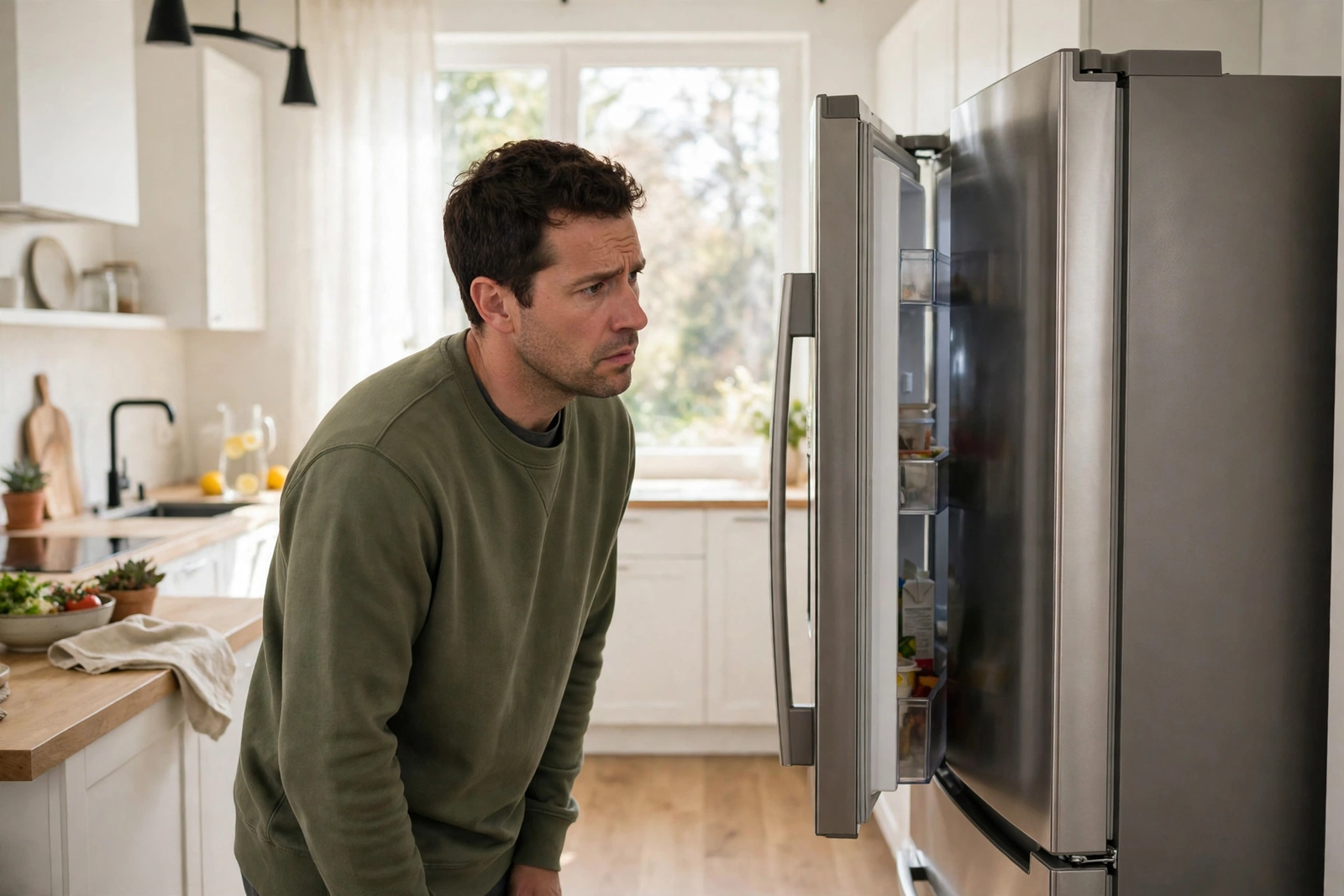
Does Homeowners Insurance Cover a Broken Refrigerator? The Short Answer
Does homeowners insurance cover a broken refrigerator? It depends entirely on why the refrigerator broke. A standard homeowners policy covers your refrigerator when a covered peril damages it — a kitchen fire, a lightning strike, a burst pipe, or theft. It does not cover a refrigerator that simply stops working because the compressor wore out, a seal failed with age, or the appliance broke down from years of use.
That distinction surprises a lot of homeowners. Your refrigerator is one of the most expensive appliances in your kitchen, and when it dies, the first instinct is to file a claim. But homeowners insurance is not a maintenance plan or an appliance warranty. It pays for sudden, accidental damage from listed perils — not for things that wear out.
This guide explains exactly when your policy pays for a broken refrigerator, when it will not, what the equipment breakdown endorsement adds, how much a repair or replacement really costs in 2026, and what happens to the food inside.
When Homeowners Insurance Does Cover a Broken Refrigerator
A standard HO-3 homeowners policy — the form most American homeowners carry — covers personal property against a list of named perils. A freestanding refrigerator counts as personal property (Coverage C), and your Coverage C limit is typically set at 50 to 70 percent of your dwelling coverage amount. Your refrigerator is covered when one of these perils damages it:
Fire and smoke
If a kitchen fire destroys your range and refrigerator, that is a covered loss. Fire is the classic covered peril, and it applies to the appliance itself as well as the food inside it.
Lightning strikes
A direct lightning strike that fries your refrigerator’s electronics is generally a covered peril. Lightning is a named peril on a standard policy, and the surge it causes is part of the same event.
Power surges from a covered event
Here is where it gets tricky. A power surge caused by lightning or a storm is usually covered. But some insurers exclude damage to tubes, transistors, and other electronic components — which is exactly what a modern refrigerator’s control board is made of. Check your policy language: some carriers cover surge damage to appliances, while others carve out electronic parts. If surge damage is a concern where you live, ask your agent how your carrier treats it.
Burst pipes and sudden water damage
If a burst pipe floods your kitchen and ruins the refrigerator, that is typically covered, because the water damage came from a sudden, accidental event. Slow leaks that went unrepaired for months are a different story and are usually excluded.
Theft and vandalism
If someone breaks in and steals or damages your refrigerator, your personal property coverage responds, subject to your deductible and limits.
In all of these cases, you still pay your deductible first, and the payout is capped by your policy limits. A standard policy also depreciates older appliances unless you carry replacement cost coverage — so a ten-year-old fridge may pay out far less than a new one costs.
When Homeowners Insurance Does Not Cover a Broken Refrigerator
The exclusions are where most refrigerator claims are denied. A standard policy does not pay when:
- The compressor fails from age or wear. A refrigerator compressor that dies after ten years of use is a maintenance problem, not an insurable loss. The insurer sees it the same way it sees a worn-out roof shingle.
- A part breaks down mechanically. A failed control board, a burned-out fan motor, a cracked seal, or a dead ice maker are all mechanical breakdowns. Every standard homeowners policy excludes mechanical breakdown.
- The appliance was neglected. Lack of maintenance — clogged condenser coils, a door seal never replaced, a fridge running for years in a hot garage — is not covered.
- A manufacturer defect is the cause. Defects belong to the manufacturer and its warranty, not to your insurer.
- Flood or earthquake damage is involved. Standard policies exclude flood and earth movement entirely. You need separate flood insurance or an earthquake endorsement for those.
- The food spoiled with no covered peril. If the fridge simply stops cooling and the food goes bad, the standard policy does not pay for the food either, because no covered peril caused the loss.
The rule of thumb is simple: your policy responds to outside events that damage working equipment. It does not respond to equipment that simply stops working.
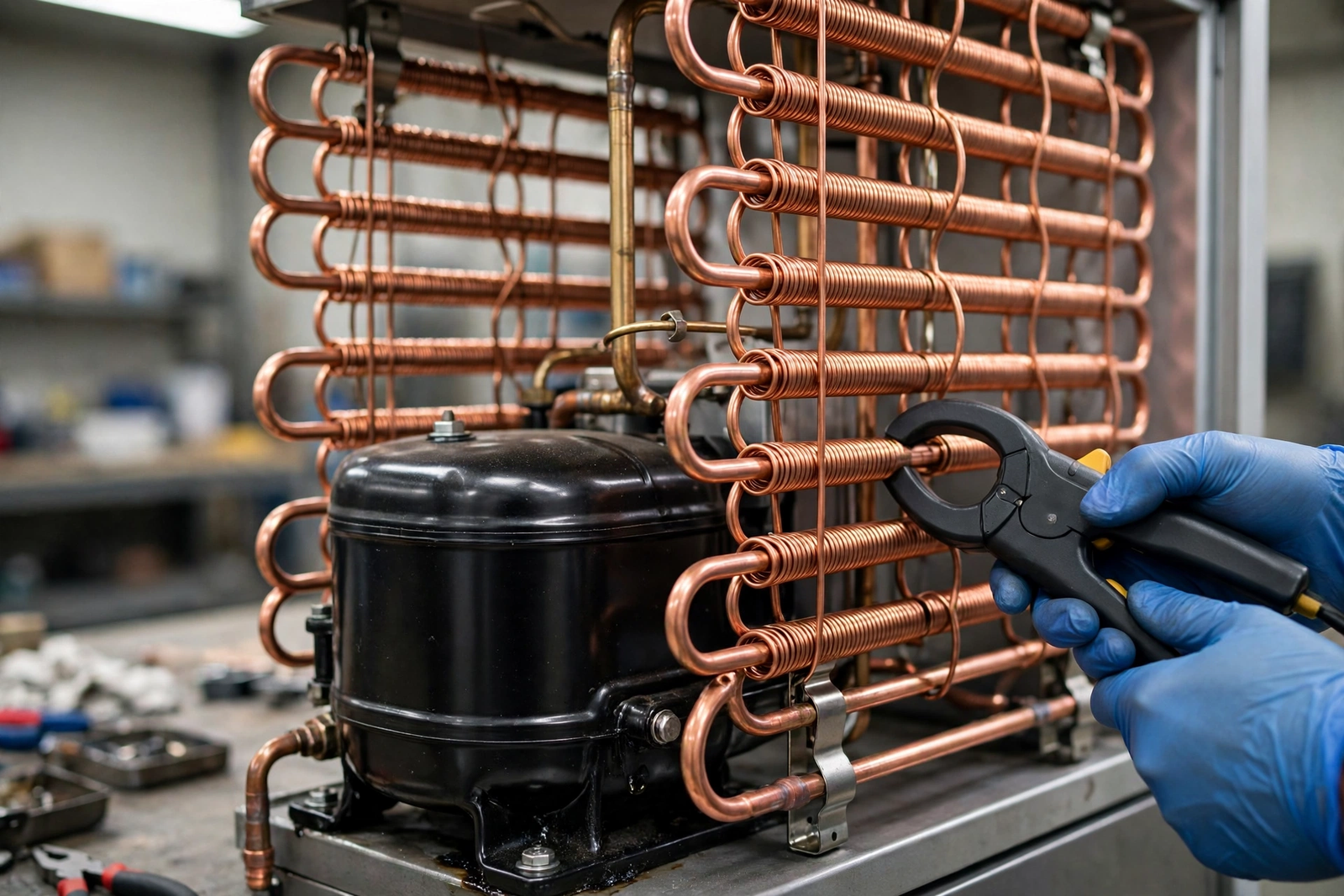
What the Equipment Breakdown Endorsement Covers
The equipment breakdown endorsement is the single most useful add-on for refrigerator coverage. It fills the exact hole the standard policy leaves open: sudden internal mechanical and electrical failure.
What it pays for
The endorsement covers sudden breakdowns of home systems, appliances, and electronics, including:
- Mechanical breakdown, including motor burnout
- Electrical failure and short-circuits
- Power surges, including surges not caused by lightning
- Pressure system breakdowns
- Damage from improper installation
A refrigerator compressor that burns out, a control board that shorts, or a sealed-system failure are all the kinds of losses this endorsement is built for.
What it costs
Equipment breakdown coverage is remarkably cheap. Most insurers charge around $25 to $50 per year for the endorsement. Coverage limits commonly reach $50,000 to $100,000 per occurrence, with a $500 deductible per claim. Some carriers will even pay up to 150 percent of the replacement cost if you replace the failed appliance with a more energy-efficient model.
The food inside is covered too
This is the part many homeowners miss. When a covered breakdown kills your refrigerator, the endorsement also pays for the perishable food that spoils as a result. One insurer’s published example describes a nine-year-old refrigerator whose main control panel failed and shut the unit off; the coverage paid for the control panel repair and all of the spoiled food, $2,500 after the deductible. Another published example involved a freezer circuit board failure that forced a full freezer replacement; the endorsement paid the total cost of the new freezer plus the spoiled food, $11,345.
What it still does not cover
Even with the endorsement, normal wear and tear and damage from neglect are still excluded. The endorsement targets sudden, uncontrollable failures — a motor burnout or an electrical surge — not a fridge that slowly lost cooling over two years because nobody cleaned the coils.
How Much Does a Broken Refrigerator Cost to Fix?
Knowing the real numbers helps you decide whether a claim is even worth filing — and whether the endorsement is worth its small annual cost.
According to Angi’s 2026 cost data, the national average refrigerator repair costs $275, with most homeowners paying between $150 and $400. The part that failed drives the price:
| Repair | Typical cost |
|---|---|
| Minor repair (sensor, relay, fan) | $120–$350 |
| Control board | $200–$600 |
| Compressor | $300–$800 |
| Sealed-system repair (leak and recharge) | $500–$1,250 |
A new refrigerator costs roughly $600 to $2,300 for a standard unit, and $1,000 to $3,000 for larger or French-door models, before delivery and installation.
Use the 50 percent rule: if the repair costs more than half the price of a comparable new refrigerator, replacement usually makes more sense. A $700 to $1,250 compressor job on a $600 fridge fails that test. On a $2,900 built-in unit, the same repair is a clear win.
Before you pay for a compressor repair, check the manufacturer’s warranty. On many LG and Samsung models, the compressor part itself carries a 10-year limited warranty, so you may only owe labor.
The Food Inside: What a Spoiled Food Claim Actually Pays
When a refrigerator dies, the food loss can rival the repair bill. A full fridge and freezer can easily hold several hundred dollars of groceries. Here is how the money works.
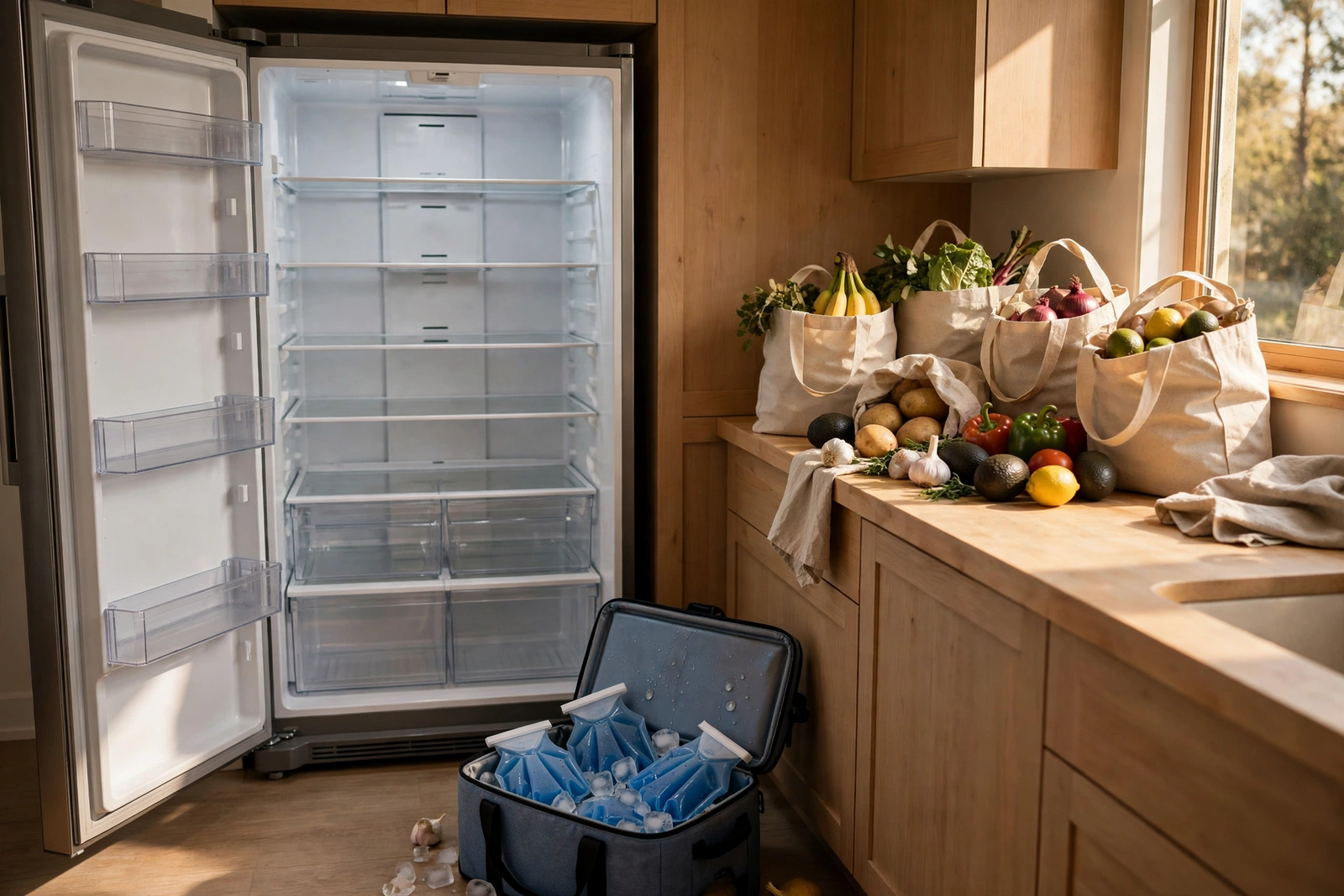
How long food stays safe
According to the USDA’s FoodSafety.gov guidance, a refrigerator keeps food safe for about 4 hours without power if you keep the door closed. A full freezer holds a safe temperature for about 48 hours, and a half-full freezer for about 24 hours. Keep the refrigerator at 40°F or below and the freezer at 0°F or below. After 4 hours without power, refrigerated perishable food — meat, poultry, fish, eggs, milk, and leftovers — should be thrown out. Never taste food to decide whether it is safe.
The coverage limits
Food spoilage coverage on a standard policy typically runs from $250 to $2,500, depending on the carrier and the endorsements you carry. Many base policies cap spoilage at $500. Adding a food spoilage or refrigerated property endorsement can raise that limit to $2,500.
The deductible problem
Your deductible applies to the claim, and that is where many spoilage claims fall apart. If your policy has a $500 spoilage limit and a $1,000 deductible, a spoiled-food loss alone pays nothing — the loss never clears the deductible. This is why the equipment breakdown endorsement matters: it covers the appliance repair and the food together, so the combined loss is far more likely to exceed your deductible.
A spoilage claim example
Imagine a nine-year-old refrigerator whose control board fails on a Friday night. By Saturday morning the food is warm. You have the equipment breakdown endorsement with a $500 deductible. The control board repair costs $450 and the spoiled food is worth $600. The combined loss is $1,050. After your $500 deductible, the endorsement pays $550. Without the endorsement, the same breakdown would pay $0 for the repair — and the food loss alone would also pay $0, because the $600 food loss does not clear a typical $1,000 homeowners deductible.
Equipment Breakdown Endorsement vs Home Warranty
Both products cover appliance breakdowns, but they work very differently. Here is how they compare for a refrigerator:
| Equipment breakdown endorsement | Home warranty | |
|---|---|---|
| What it is | An add-on to your homeowners policy | A separate service contract |
| Typical annual cost | $25–$50 | Around $1,049 on average (Angi 2026 data), with appliance-only plans from $400–$500 |
| Per-claim cost | Your policy deductible (often $500) | A service call fee, typically $75–$125 |
| Covers | Sudden mechanical and electrical failure | Breakdowns from normal wear and tear |
| Who chooses the repair company | Usually you | Usually the warranty company |
| Coverage limit | Up to $50,000–$100,000 per occurrence | Capped per item and per term, with payout limits |
The endorsement is cheaper and simpler if your goal is protection against sudden, expensive failures. A home warranty makes more sense if your appliances are old and you expect wear-and-tear failures across several systems at once. Some homeowners carry both.
How to File a Claim for a Broken Refrigerator
If a covered event broke your refrigerator, follow these steps:
- Stop the damage. Move food to coolers with ice, unplug the unit if it is safe to do so, and shut off water to the fridge’s supply line if there is a leak.
- Photograph everything. Take pictures of the refrigerator, the damage, and the spoiled food before you throw anything away. Keep an itemized list of the food with approximate values.
- Do not discard evidence too soon. Your adjuster may want to see the failed part or the spoiled food. Bag and label items if you must clear them out, and keep receipts for replacement groceries.
- Call your insurer promptly. Report the cause of the loss accurately — fire, lightning, surge, or breakdown — because the cause decides whether the claim is covered.
- Get a repair estimate. A technician’s written diagnosis (for example, “compressor failed due to electrical surge”) supports the claim far better than a verbal description.
- Ask about the endorsement. If you carry equipment breakdown coverage, tell the adjuster. Many claims are denied under the base policy that would be paid under the endorsement.
How to Protect Your Fridge From the Next Breakdown
A few cheap habits reduce the odds of a refrigerator failure and strengthen any future claim:
- Clean the condenser coils every six months. Dust-covered coils make the compressor work harder and fail sooner.
- Use a surge protector rated for major appliances, especially if your area has frequent storms or grid fluctuations.
- Keep the fridge full but not packed. A full fridge holds its temperature better, and good airflow around the coils matters more than most owners realize.
- Check the door seals. A dollar bill should be hard to pull out of a closed door. Weak seals let warm air in and force the compressor to run constantly.
- Keep your paperwork. Save the purchase receipt, the model number, and the warranty card. If the compressor is still under the manufacturer’s 10-year parts warranty, that saves you hundreds of dollars before insurance is even involved.
- Review your policy once a year. Confirm whether you have equipment breakdown coverage and what your food spoilage limit is. The endorsement costs less than a single takeout dinner per year, and it is the only part of your policy that covers a dead compressor.
Frequently Asked Questions
Does homeowners insurance cover a broken refrigerator compressor?
No, not under a standard policy. A compressor that fails from age or mechanical breakdown is excluded as wear and tear. The equipment breakdown endorsement does cover compressor failure, including motor burnout and electrical failure, up to your endorsement limit after the deductible.
Does homeowners insurance cover a broken refrigerator after a power outage?
It depends on what caused the outage. If lightning or a storm caused the surge that killed the fridge, the loss is usually covered as a named peril. If the power simply went out and the food spoiled, the food may be covered under your spoilage limit, but only if the loss exceeds your deductible. If the fridge broke down on its own during the outage, only the equipment breakdown endorsement responds.
Does homeowners insurance cover food spoilage from a broken refrigerator?
Only when a covered peril caused the breakdown. A standard policy covers spoiled food when fire, lightning, or another named peril kills the fridge, typically with a $250 to $2,500 limit. A mechanical breakdown with no covered peril is not covered under the base policy — but the equipment breakdown endorsement covers the spoiled food along with the repair.
Is a refrigerator covered under dwelling or personal property?
A freestanding refrigerator is personal property (Coverage C). A built-in refrigerator that is permanently installed may be treated as part of the dwelling (Coverage A). The distinction matters for which limit applies, so ask your agent how your carrier classifies yours.
Should I file a claim for a broken refrigerator?
Only if the loss clearly exceeds your deductible and the cause is covered. A $275 average repair will not clear most deductibles, and filing a small claim can still count against your claims history. For a dead compressor on an old fridge, the equipment breakdown endorsement is usually the only route that pays.
Does a home warranty cover a broken refrigerator?
Yes, a home warranty covers refrigerator breakdowns from normal wear and tear, which homeowners insurance does not. The trade-off is cost — around $1,049 per year on average, plus a $75 to $125 service fee per claim — and the warranty company usually chooses the repair provider.