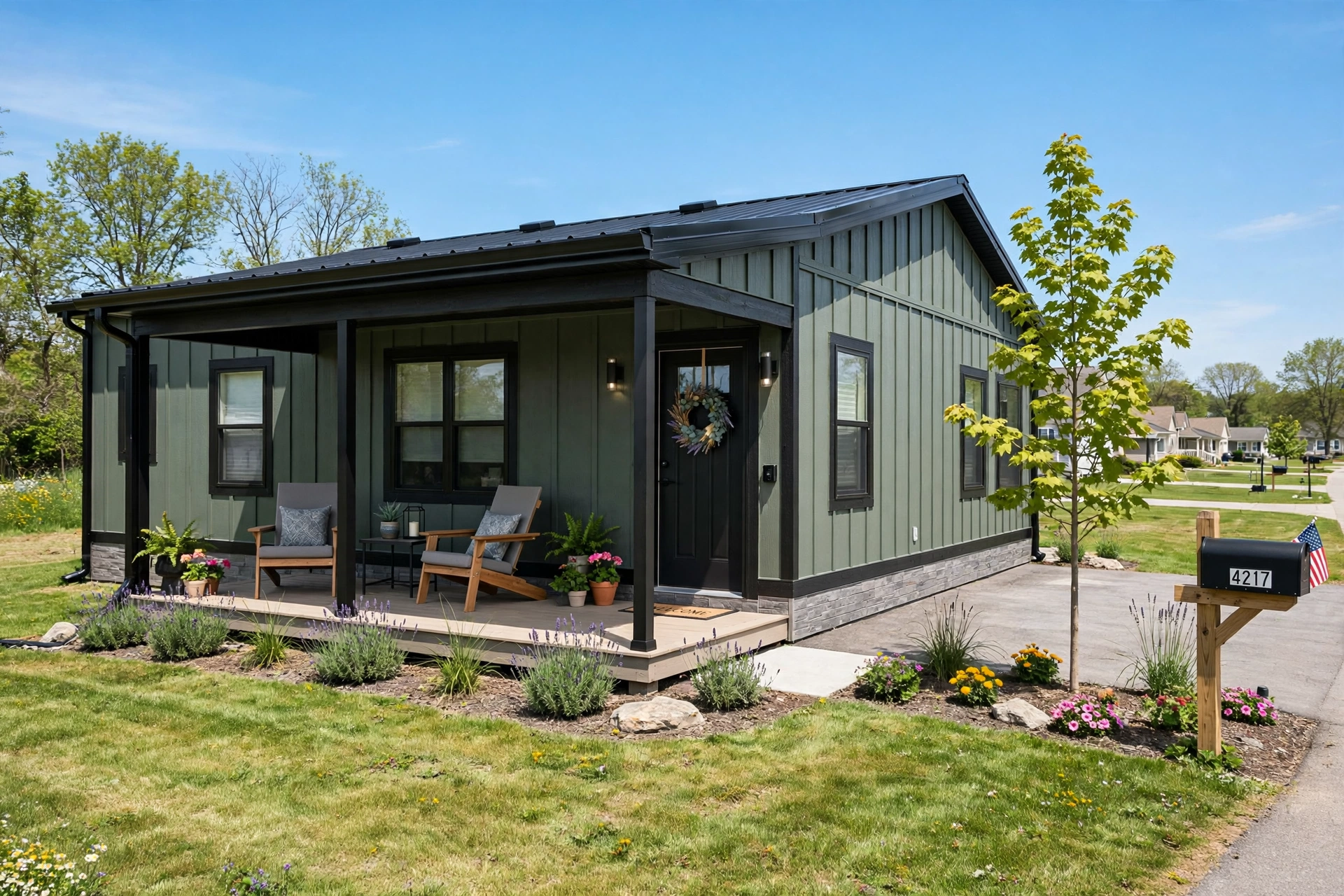
Yes, you can buy a factory-built home with an fha loan mobile home program in 2026 — but only if you pick the right FHA program and the home meets strict federal rules. The FHA offers two routes, Title I and Title II, and choosing the wrong one is the most common reason buyers get turned down. The prize is real: in September 2025, the average new manufactured single home sold for $88,800, against a $414,400 median for new single-family houses. This guide explains how an fha loan mobile home works, what it costs, and how to apply.
What Is an FHA Loan Mobile Home?
An fha loan mobile home is a mortgage insured by the Federal Housing Administration, part of HUD. The FHA does not lend directly — a private lender makes the loan, and FHA insurance protects the lender if you default, letting lenders accept lower scores and smaller down payments than most conventional loans.
One word causes most confusion. In everyday language, “mobile home” means any factory-built home. In federal rules, a home built before June 15, 1976 is a mobile home; a home built on or after June 15, 1976 to the federal HUD Code is a manufactured home. FHA will not insure a loan on a home built before that date. Check the build date first — it is on the HUD data plate inside the home and on the red HUD certification label on the exterior of each section. Before June 15, 1976, an FHA loan is not an option.
FHA Title I vs Title II: The Two Programs
FHA Title I: For Homes on Leased Land
An fha loan mobile home under Title I can finance a new or used manufactured home, a lot, or a home-and-lot combination. Crucially, you do not need to own the land. The home can sit on leased land, for example in a manufactured home community. HUD requires the initial lease term to be at least three years, with at least 180 days’ advance written notice if the lease is to be terminated.
Title I treats the home as personal property (chattel) unless classified as real estate. No permanent foundation is required, but the home must meet the Model Manufactured Home Installation Standards and state and local rules, and be your principal residence with adequate water and sewage. The trade-off is lower limits, shorter terms and usually higher rates.
FHA Title II: For Homes on Land You Own
A Title II loan works like a standard FHA mortgage. You finance the home and the land together as real property, with longer terms and higher borrowing limits.
You must own the land the home sits on, or be buying it with the home. The requirements are stricter: the home must be permanently affixed to a foundation meeting HUD’s Permanent Foundations Guide (HUD-4930.3G), certified by a licensed engineer or architect in the state. Tongue, axles and wheels must be removed, the crawl space enclosed, and the home titled and taxed as real estate. It needs at least 400 square feet and generally must not have been moved from its original site.
Title I vs Title II Comparison Table
| Feature | FHA Title I | FHA Title II |
|---|---|---|
| What it finances | Home only, lot only, or home + lot | Home + land together as real property |
| Land ownership | Not required — leased land allowed | Required |
| Property classification | Personal property (chattel) or real estate | Real property |
| Permanent foundation | Not required | Required, per HUD-4930.3G, with engineer certification |
| Maximum loan term | 20 years 32 days (single-section home); up to 25 years 32 days (multi-section home + lot) | Up to 30 years |
| 2026 loan limits | See Title I limits below | Standard FHA county limits |
| Best for | Homes in parks or on leased land | Permanent homes on land you own |
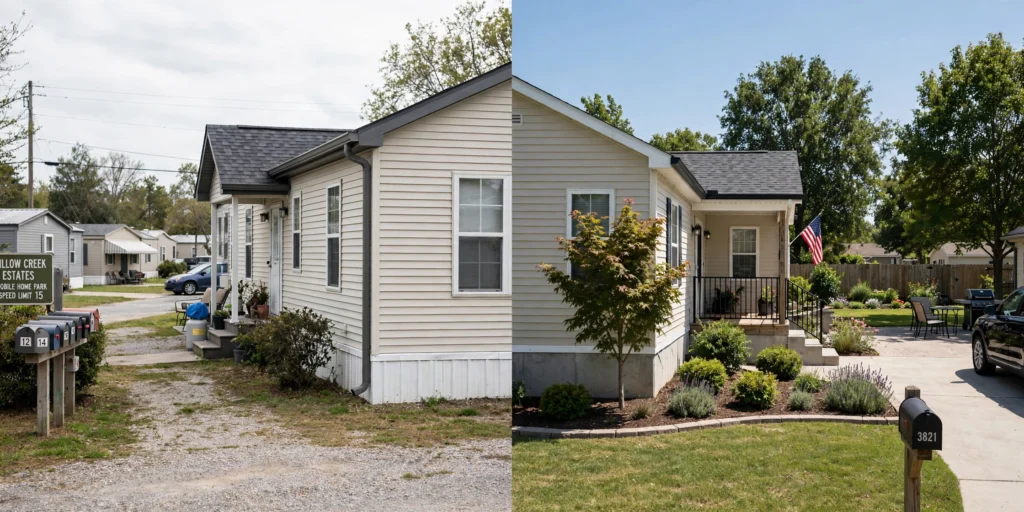
FHA Loan Mobile Home Limits for 2026
Title I Loan Limits (2026)
Title I limits are set nationally by HUD and were updated in March 2024, after going unchanged for roughly 15 years. HUD’s Title I Manufactured Home Loan Program Allowable Loan Parameters (March 2024) set them at: Single-section home only: $105,532. Multi-section home only: $193,719. Lot only: $43,377. Home + lot, single-section: $148,909. Home + lot, multi-section: $237,096.
Caution: the 21st Century ROAD to Housing Act (July 2026) directs FHA to raise Title I limits further, but HUD had not yet published the new limits at the time of writing — ask your lender for the current figure. Do not use the older pre-2024 limits ($69,678 / $92,904) still shown on some sites.
Title II Loan Limits (2026)
Title II loans follow the standard FHA limits for one-unit properties, which vary by county. For case numbers assigned on or after January 1, 2026, HUD Mortgagee Letter 2025-23 sets the floor at $541,287 in most areas and the ceiling at $1,249,125 in high-cost areas ($1,814,625 in Alaska, Hawaii, Guam and the U.S. Virgin Islands). Look up your county limit on HUD’s mortgage limits search tool — it caps the loan amount, not the purchase price.
Credit Score, Down Payment and DTI Requirements
For Title II, your credit score controls your down payment: 580+ means as low as 3.5% down; 500–579 means 10% down; below 500 you are not eligible. For Title I, HUD sets no minimum score, but lenders do — typically 5% down at 500+, 10% under 500 — and many set their own minimums, often 620 or 640.
Your debt-to-income ratio (DTI) compares total monthly debt payments with gross monthly income. For an fha loan mobile home, you will likely need a DTI of 43% or less. Add up every monthly debt — including the new mortgage, taxes and insurance — divide by gross monthly income and multiply by 100. Above 43%, paying down a car loan or credit card before applying can make the difference. The home must also be your primary residence, with about two years of steady employment history.
HUD Construction and Foundation Standards
Every FHA-financed manufactured home must meet the HUD Code. Your lender and appraiser will check the build date (on or after June 15, 1976), the red HUD certification label, a minimum of 400 square feet for Title II, and a permanent chassis.
For Title II, the foundation must meet HUD’s Permanent Foundations Guide, be built on site from durable materials on reinforced concrete footings, and be certified by a licensed engineer or architect — pier-and-beam with vinyl skirting alone does not qualify. If any of these fail, the loan cannot be insured, so check them before paying for an appraisal.
How Much Does an FHA Loan Mobile Home Cost?
Budget beyond the purchase price of an fha loan mobile home. On a Title II loan with a 580+ score, the down payment is 3.5% — $5,250 on a $150,000 package. FHA loans also require a mortgage insurance premium (MIP): typically 1.75% upfront (usually financed into the loan), plus 0.15% to 0.75% a year, paid monthly.
Title I rates are usually higher than Title II rates, because the loan is secured by a moveable home rather than real property. Also budget for transport, installation, utility hookups and foundation work — these can add thousands. A seller can contribute up to 6% of the sales price toward closing costs and discount points.
The Insurance Step Lenders Require
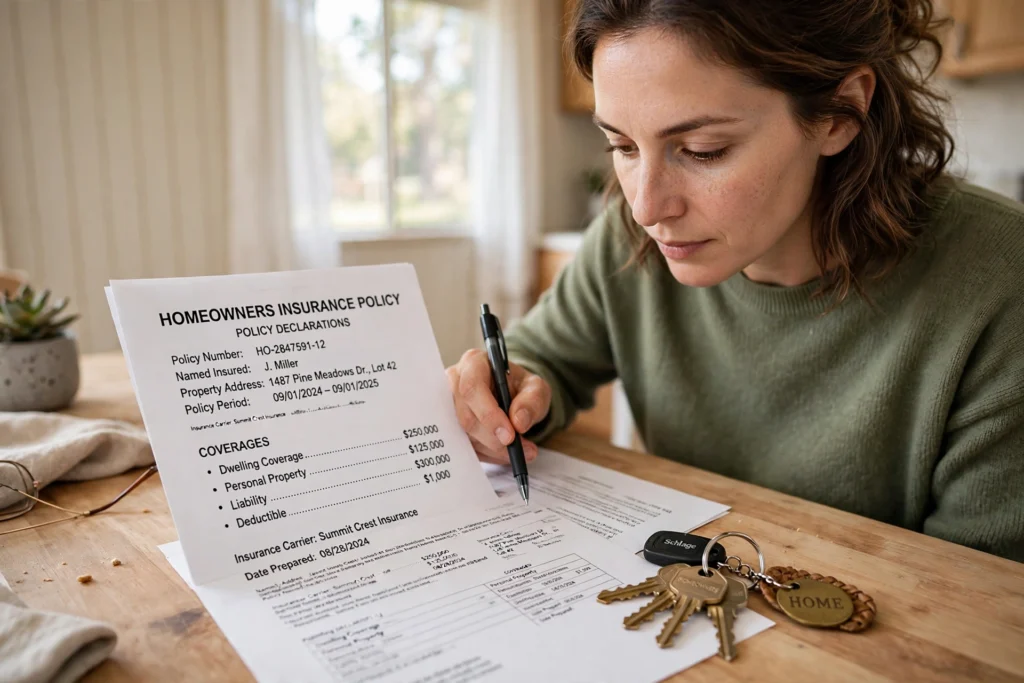
Hazard insurance is required for every fha loan mobile home. Under HUD Handbook 4000.1, cover must be at least the unpaid loan balance, with the lender named as loss payee. If you let it lapse, the lender must obtain cover and may pass the cost to you.
Flood insurance is also required if any part of the site is in a FEMA-designated Special Flood Hazard Area (SFHA), and must be kept for the life of the loan. A site in SFHA Zone V, or in Zone A where National Flood Insurance Program cover is unavailable, is not eligible at all.
A standard homeowners policy does not cover flood, so check the FEMA flood map and get insurance quotes early — while shopping, not after your offer is accepted.
How to Apply
- Decide which program fits. Leased land or a park points to Title I; land you own with a permanent foundation points to Title II.
- Check the home first. Confirm the build date, HUD label and data plate, size, and — for Title II — the foundation and engineer certification.
- Check your numbers. Review your credit score, calculate your DTI, and work out the down payment you can afford.
- Find an FHA-approved lender experienced in manufactured home loans; not all offer both programs.
- Get insurance quotes before you apply.
- Apply and get an appraisal from an FHA-approved appraiser.
An fha loan mobile home program fits if you want an affordable home, can meet the 3.5% down payment and 43% DTI rules, and the home passes the HUD checks. Title II is the better deal when you own the land; Title I is the practical option in a park or on leased land. It does not fit a pre-1976 home or one whose foundation cannot be certified — then ask about a conventional chattel loan, a VA or USDA loan if eligible, or seller financing.
FAQs
Can I get an FHA loan for a mobile home in a park?
Yes, through FHA Title I. You do not need to own the land, but the home must be your principal residence, built on or after June 15, 1976, and the initial lease must be at least three years.
What credit score do I need for an FHA loan for a mobile home?
For an fha loan mobile home under Title II, 580+ qualifies for as low as 3.5% down; 500–579 may qualify with 10% down. Many lenders set higher minimums (often 620–640). Title I has no HUD-set minimum, but lenders apply their own.
Can I get an FHA loan for a mobile home built before 1976?
No. Homes built before June 15, 1976 were not built to the HUD Code and are ineligible for FHA-insured financing. You would need cash, seller financing, or another loan.
What is the maximum FHA loan for a mobile home in 2026?
Title I limits are $105,532 for a single-section home only, $193,719 for a multi-section home only, and up to $237,096 for a multi-section home-and-lot combination. Title II follows standard FHA county limits: $541,287 in most areas, up to $1,249,125 in high-cost areas.
Does an FHA loan for a mobile home require insurance?
Yes. Hazard insurance is required, for at least the unpaid loan balance, with the lender as loss payee. Flood insurance is also required in a FEMA-designated Special Flood Hazard Area, for the life of the loan.
Disclaimer: This article is general information only and is not financial, legal or mortgage advice. FHA rules, loan limits and lender requirements change, and individual lenders may apply stricter standards than the FHA minimums. Confirm current limits, rates and requirements with HUD and with an FHA-approved lender before you apply.

One Comment on “FHA Loan for a Mobile Home: Requirements & Costs 2026”